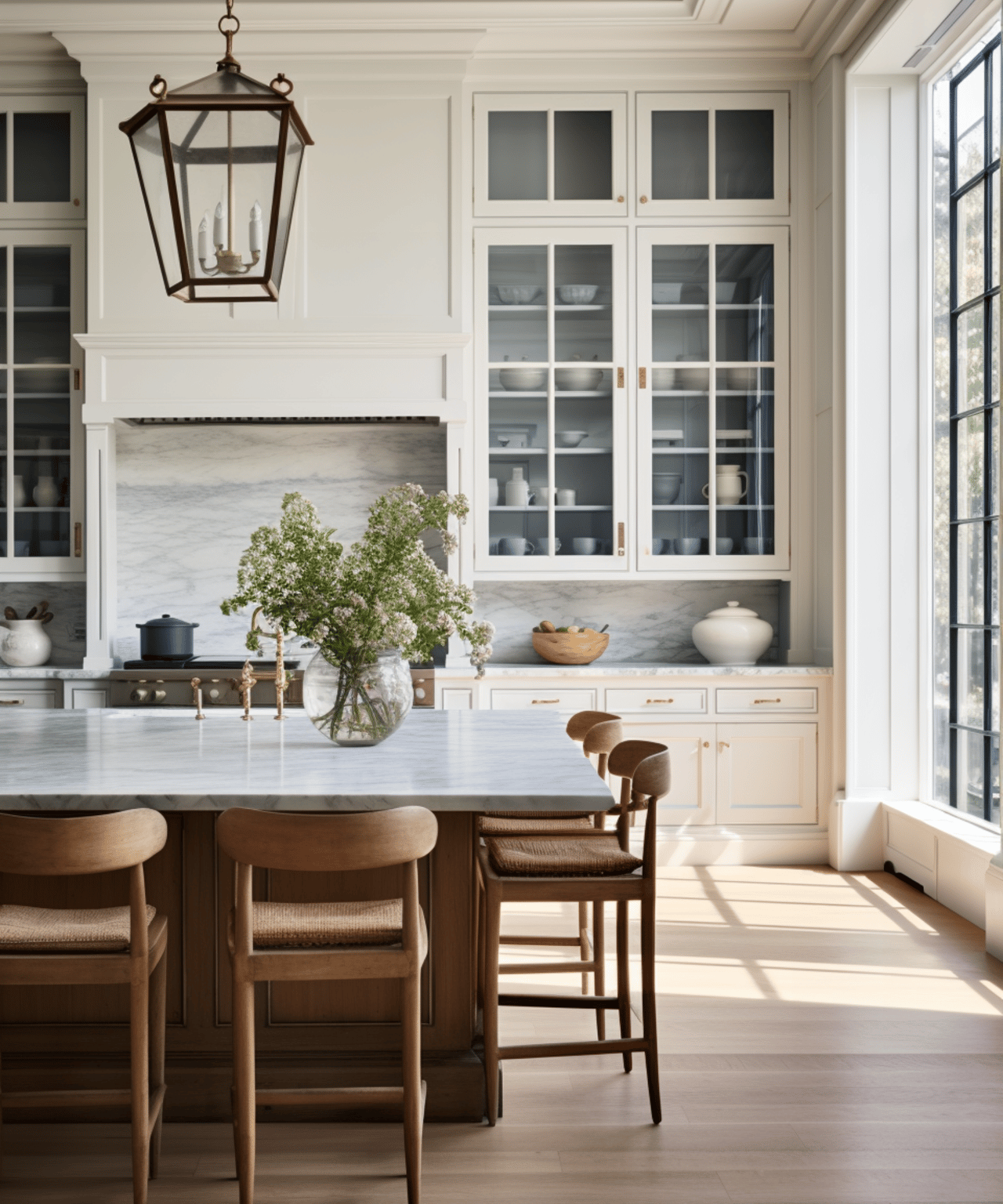
Two homes went under contract this year within a few blocks of each other. One sits on a brick sidewalk off Market Street, framed sometime in the 1880s, with original hardwood and a fireplace mantel nobody alive remembers installing. The other sits off Hughes Ford Road, framed last spring, with a two-car garage and a clubhouse pool still smelling of fresh paint. Ask most buyers which one cost more and they will guess the new one, or guess the old one, depending on which story they believe about Frederick. Both guesses are wrong in the same way: the two homes landed in almost exactly the same price band.
That overlap is the thing worth understanding before you pick a side of downtown.
The Number That Doesn't Match The Assumption
Start with the numbers that frame the whole city. Over the three months ending June 2026, the median sale price across Frederick city sat at $442,000, essentially flat compared with the same stretch a year earlier. Widen the lens to Frederick County and the median climbs to $514,000, up 4.4% over the same window, a gap that reflects the county's newer, larger-lot subdivisions pulling the average up while the city core holds steadier.
Downtown Frederick itself is its own smaller market, and it behaves differently from both. Trailing twelve-month sold data puts the median there somewhere between $470,000 and $480,000, depending on the exact reporting window, roughly 3 to 4% above where it sat a year prior. Current asking prices tell a softer story: as of September 2026, homes listed for sale in Downtown Frederick carried a median list price of $475,000, down 4% from a year earlier and down 5% from the month before. Sellers are asking for less right now than they were, even though what buyers actually paid over the past year edged up.
Now look east. Renn Quarter, the roughly 200-acre master-planned community D.R. Horton is building at Hughes Ford Road and Monocacy Blvd, has active new-construction townhomes priced between $461,990 and $516,990 as of this July's builder pricing update, with 1,962 or more square feet and four bedrooms. Seven move-in-ready single-family homes were also available on that same builder page.
Put the two ranges side by side and there is almost no gap. A buyer choosing between a rehabbed Federal-style rowhome downtown and a brand-new townhome a walkable distance away is not choosing between cheap and expensive. Both properties this year would likely have appraised within a few thousand dollars of each other.
What The Same Price Actually Buys
The dollar figure being similar does not mean the product is similar. Here is what that overlapping price band gets you on each side of the line.
| Downtown Frederick (historic core) | Renn Quarter (new construction) | |
|---|---|---|
| Typical price | Roughly $470,000-$480,000 (12-month sold median) | $461,990-$516,990 (active builder pricing) |
| Home age | 1700s through the 2010s, block by block | New construction, actively being built out now |
| Parking | Street or alley, rarely a garage | 1-2 car garage standard |
| HOA | Rare on individual rowhomes | Included, covers clubhouse, pool, dog park, greenspace, pavilions |
| Systems | Original or updated piecemeal over decades | New HVAC, plumbing, electrical under builder warranty |
| Pace of sale | 28-34 days (12-month average) | Builder-controlled release schedule |
| Walk to Market Street | On it or a block off it | A planned trail connects to Carroll Creek |
Neither column is the better answer. It depends entirely on what the buyer is optimizing for.
Why The Old Core Still Moves Fast
The historic core's resilience is easy to miss if you only look at the softening list prices. Downtown Frederick's sold homes moved in an average of 28 to 34 days over the trailing twelve months. Compare that with the three months ending June 2026, when the citywide average across Frederick sat at 37 days and Frederick County averaged 36 days. The windows are not identical, but the direction is consistent: the historic core is not the slow-moving corner of the market you might expect from its age.
Part of that is supply. There is a fixed number of Federal-style rowhomes and 19th-century brick townhouses within walking distance of Carroll Creek Park, the Weinberg Center for the Arts, and Market Street's restaurants and shops. Nobody is building more of them. When one comes onto the market in good condition, the buyer pool that specifically wants original woodwork, a walk to First Saturday gallery openings, or a five-minute stroll to Baker Park does not have many substitutes to shop instead. That scarcity is what keeps days on market low even while asking prices ease month over month. Sellers pricing off last year's closed comps may be asking a touch more than today's buyers are willing to pay right now, which is the gap between the softening list price and the still-elevated sold median.
The New Supply A Few Blocks East
Renn Quarter exists because that scarcity has a limit. At full build-out, the community is planned to bring more than 1,000 new residences to Frederick's east side, a scale no infill project downtown could match. Buyers who want the walkability of downtown living, the same trail system that eventually links to Carroll Creek, and Baker Park within reach, but also want a garage, a builder warranty, and a clubhouse pool, are the exact profile Renn Quarter is built to absorb.
The community is not only for-sale product. The Foundry at Renn Quarter, a 176-unit build-to-rent townhome project at 264 Monroe Ave, is being developed by Bethesda-based Couloir Ventures and managed by JAG Management. As of this spring, a portion of the first 75-unit phase was complete, with residents already moving in. That matters for anyone comparing the two submarkets, because it means Renn Quarter is pulling in both buyers and renters who might otherwise have been competing for downtown's thin resale inventory. The pressure that keeps historic homes moving quickly is, in part, pressure that has somewhere else to go.
What This Means If You're Choosing A Side Of Monocacy Blvd
If you are comparing these two markets for your own move, the price tag will not settle it. A few practical questions will:
- Do you want a garage, or are you comfortable with street parking and the occasional walk from a spot down the block?
- Does an HOA fee covering a pool and clubhouse appeal to you, or would you rather have no HOA and manage your own property as you see fit?
- Are you prepared to budget for the occasional surprise that comes with a house built before modern electrical and plumbing codes, or does a builder warranty on new systems matter more to your peace of mind?
- Is walking distance to Market Street's restaurants and the Weinberg Center's calendar a daily habit you want, or is a planned trail connection to Carroll Creek close enough?
- Are you buying for resale flexibility in a market with thin, scarce inventory, or for the predictability of a large, phased new-construction community?
None of these have a wrong answer. They are the actual decision hiding behind a median price that, on paper, makes the two neighborhoods look interchangeable.
Frederick's downtown and its newest east-side community are having two different conversations with the same number. One is a story about scarcity holding a market steady even as list prices soften. The other is a story about a builder meeting demand at a scale downtown never could. Buyers who understand which conversation they are actually having tend to make faster, more confident decisions, and sellers who understand it price their homes with fewer surprises.
If you are weighing a historic rowhome against new construction, or trying to figure out what your current Frederick home is actually worth in a market that looks flat on paper but moves differently block by block, The Viands Group can walk you through the comparison with the same level of detail. Request your free home valuation and let's figure out which side of this price band makes sense for you.