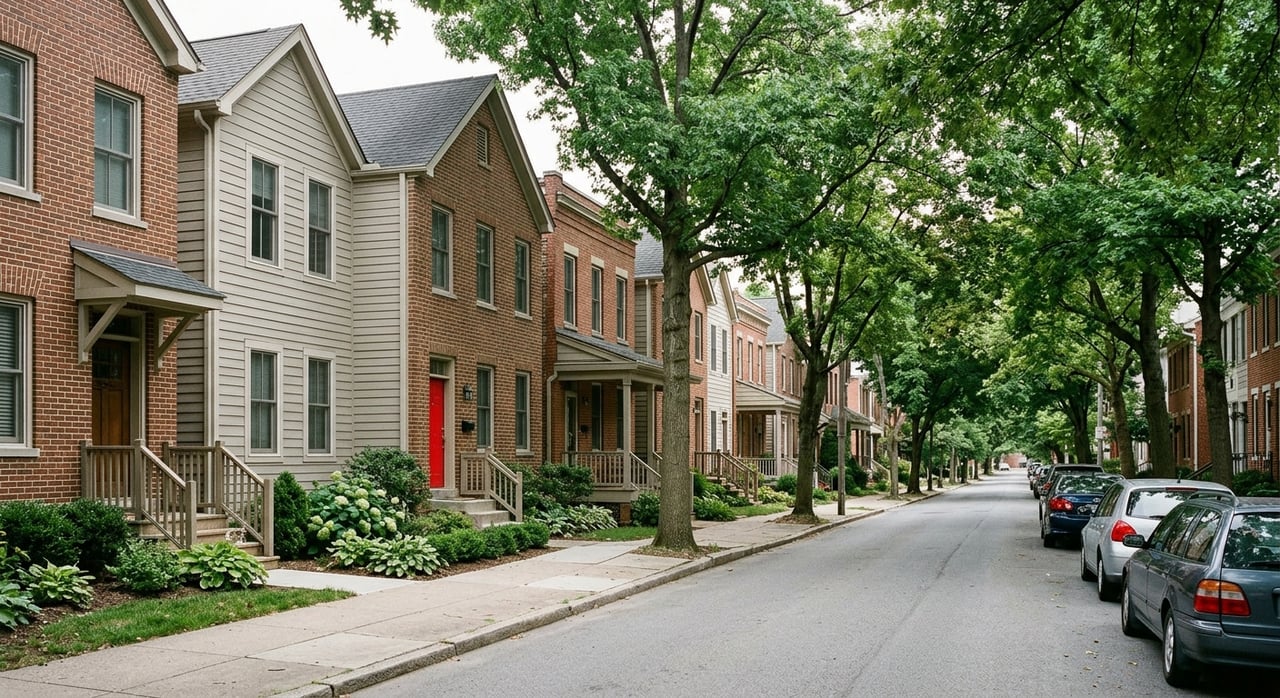
Thinking about trading your DC routine for something a little calmer, a little roomier, and still connected to the region? Frederick often lands on that shortlist for a reason. If you are wondering what day-to-day life here actually feels like, this guide will help you understand the pace, the layout, the commute, and the housing mix so you can decide whether the move fits the life you want. Let’s dive in.
Why Frederick Feels Different
Frederick does not feel like a generic outer-ring suburb. It is a mid-sized city with a defined center, and that shape matters once you start living here. As of July 2024, the city had 89,537 residents, and local planning documents describe a compact, walkable historic downtown surrounded by quieter 20th-century neighborhoods.
That gives Frederick a more self-contained feel than many places farther out from DC. You are not just moving to a place where people sleep and commute. You are moving to a city with its own downtown identity, steady community activity, and an everyday rhythm that feels distinct from the urban core.
Frederick is also more diverse than some first-time visitors expect. According to the 2024 ACS report, 20.3% of residents are foreign-born, and 27.9% of residents age 5 and over speak a language other than English at home. For many DC transplants, that helps Frederick feel broader and more mixed than a purely commuter-driven market.
What Daily Life Looks Like
If you are used to DC, one of the biggest adjustments is pace. Frederick is active, but it is active in a smaller-city way. You still have a lively center, public events, and places to spend time on foot, but the experience is usually more neighborhood-plus-downtown than all-day urban motion.
Local planning language emphasizes arts, public art, cultural events, vibrant neighborhoods, and civic engagement. That supports what many buyers notice quickly once they spend time here: Frederick feels engaged and lived-in, not sleepy. At the same time, it usually offers a calmer pace than a denser DC neighborhood.
For many relocating buyers, that balance is the appeal. You may gain more breathing room without feeling disconnected from restaurants, events, or a recognizable city center. It is less urban-core intensity and more manageable daily living.
Walkability in Frederick
Downtown Is the Main Walkable Hub
If walkability is high on your list, downtown Frederick is where you should focus your attention. The downtown core, especially around Carroll Creek, is the clearest example of a pedestrian-friendly routine in the city. This is the part of Frederick that most closely matches what many DC transplants mean when they say they want to keep some walkable lifestyle benefits.
Carroll Creek Linear Park helps anchor that experience. The city says the park includes walking and biking paths and hosts concerts, plays, school functions, city functions, and community events. That makes it more than just a scenic feature. It is part of how people actually use downtown in everyday life.
Walkable, Not Car-Free
Frederick’s downtown is walkable, but it is not car-free. The city’s street parking system makes that pretty clear. On-street parking uses ParkMobile, physical meters are being phased out, select downtown blocks have a four-hour maximum stay, parking is free after 6 p.m., and it is free all day Sunday.
That setup tells you something important about how the city functions. You can absolutely build part of your lifestyle around walking downtown, especially for evening outings and errands in the core. But Frederick still operates as a place where driving remains part of the overall routine.
Outside Downtown, Expect More Driving
Once you move beyond the downtown core, Frederick becomes much more neighborhood-driven and car-dependent. That does not mean the city is hard to navigate. It just means the daily pattern usually shifts from walking everywhere to mixing driving with selective walkable destinations.
For a DC transplant, this may be the single biggest lifestyle change. In Frederick, you can have walkable pockets, but most households still rely on a car to complete the full daily loop.
Commuting to DC From Frederick
Regional Access Is Part of the Appeal
Frederick sits in a strategic regional position. The city notes that it is about 50 miles from both Washington and Baltimore, with access through I-70, I-270, US-15, and US-340. That location helps explain why Frederick remains a popular option for people who want to stay connected to jobs in the Washington suburbs while living in a different kind of environment.
Frederick also functions as its own employment center, which matters if your household does not need a full-time DC commute. For buyers with hybrid schedules or remote flexibility, that can make the move feel much more practical.
Rail and Transit Exist, But Driving Leads
There are public transit options, but they generally complement driving rather than replace it. MARC’s Brunswick Line extends to Frederick and Monocacy and runs to Washington Union Station, Rockville, and Silver Spring. Frederick County Transit offers free rides, nine connector routes in the city and urbanized county, commuter shuttles, and Meet-the-MARC shuttles.
Even with those options, the local commuting picture is still car-forward. The 2024 ACS report shows that 68.0% of workers drove alone, 7.5% carpooled, 2.7% used public transportation, 4.2% walked, and 16.4% worked from home. The mean travel time to work was 31.0 minutes.
What the Commute Adjustment Feels Like
If you are coming from a Metro-centered lifestyle, this is where expectations matter. Frederick gives you access to DC, but it does not deliver the same transit-saturated experience as living in the District or in closer-in inner suburbs. In practical terms, many residents build their routines around the car first and use rail or shuttle options when they fit the schedule.
For some buyers, that is a fair trade for more space and a different pace. For others, it is the key lifestyle question to think through before making a move. The right fit usually depends on how often you need to be in DC and how flexible your workweek really is.
Housing Style and Value
The Housing Stock Is Mixed
Frederick does not offer just one housing type. The 2024 ACS report shows a spread of unit sizes, with 3-bedroom homes as the largest category, followed by 2-bedroom and 4-bedroom units. That suggests a wider mix of living options than buyers sometimes expect before they start looking closely.
This variety is part of Frederick’s appeal. Depending on where you search, you may find historic homes, more traditional neighborhood layouts, townhomes, condominiums, and properties that support different space and budget goals. That gives relocating buyers more ways to match the move to their actual lifestyle.
Historic Areas Add Character
The Frederick Town Historic District was laid out in 1745 and remains essentially intact, and the city describes it as a living historic district. For buyers drawn to older homes and established streetscapes, that adds real character to the city experience. It also helps explain why parts of Frederick feel visually distinct from newer suburban development.
If you are considering an older property in the historic district, there may also be practical benefits to explore. The city offers historic-preservation incentives, including a property tax credit for eligible rehabilitation work in the historic district. That is useful context if you are attracted to downtown or nearby historic neighborhoods and want to understand the ownership picture more fully.
Frederick’s Value Story Is About Tradeoffs
For many DC-area movers, Frederick stands out because it may offer a middle-ground price point. The 2020 to 2024 QuickFacts show a median owner-occupied home value of $401,500 and a median gross rent of $1,764. For context, Montgomery County’s median owner value was $640,300, DC’s was $737,100, and Baltimore County’s was $349,300.
The safest way to read that data is this: Frederick is often more affordable than closer-in DC suburbs, but it is not automatically the cheapest option in every regional comparison. The value story is less about chasing the lowest number and more about weighing price against lifestyle, space, and the type of daily routine you want.
Who Tends to Like Living Here
Frederick often appeals to people who want to stay within the metro orbit while stepping into a different daily pattern. If you like the idea of a recognizable downtown, local events, and some walkable routines, but you are ready for more space and a slower pace, Frederick can make a lot of sense. It is especially compelling for buyers with hybrid or remote work flexibility.
It can also work well if you want options. You may spend part of your week commuting, part working from home, and part enjoying a city that has its own center rather than revolving entirely around DC. That flexibility is one reason Frederick continues to attract relocating buyers from more expensive and denser parts of the region.
What to Think Through Before You Move
Before you make the jump, it helps to be honest about your non-negotiables. Ask yourself whether you want true daily walkability or whether walkable pockets are enough. Think about how often you need to be in DC, how comfortable you are with a car-forward routine, and what kind of housing style best fits your next chapter.
Frederick tends to work best when buyers choose it for what it is, not for what they hope it might mimic. It is not DC north. It is a historic, growing city with a strong downtown identity, regional access, and a more grounded everyday rhythm.
If you are exploring a move from DC to Frederick, local guidance can make the transition much easier. The Viands Group helps buyers navigate Frederick with clear advice, local perspective, and a smooth process from first tour to closing.
FAQs
Is Frederick, Maryland walkable for DC transplants?
- Yes, especially in downtown Frederick and around Carroll Creek. Outside that core, most daily routines become more car-oriented.
Can you commute from Frederick to DC for work?
- Yes. Frederick has regional highway access and MARC service to places including Rockville, Silver Spring, and Washington Union Station, but many residents still rely on driving for daily commuting.
Does Frederick feel lively or quiet compared with DC?
- Frederick generally feels active rather than sleepy, with community events, arts activity, and a strong downtown presence, but it usually moves at a calmer pace than DC.
Is Frederick more affordable than DC-area suburbs?
- Often, yes compared with many closer-in DC suburbs. But Frederick is best understood as a middle-ground value option rather than the lowest-cost choice in the region.
What is the biggest lifestyle adjustment when moving from DC to Frederick?
- For many people, the biggest adjustment is shifting from a transit-heavy, high-density routine to a smaller-city lifestyle where downtown is walkable but most households still depend on a car.