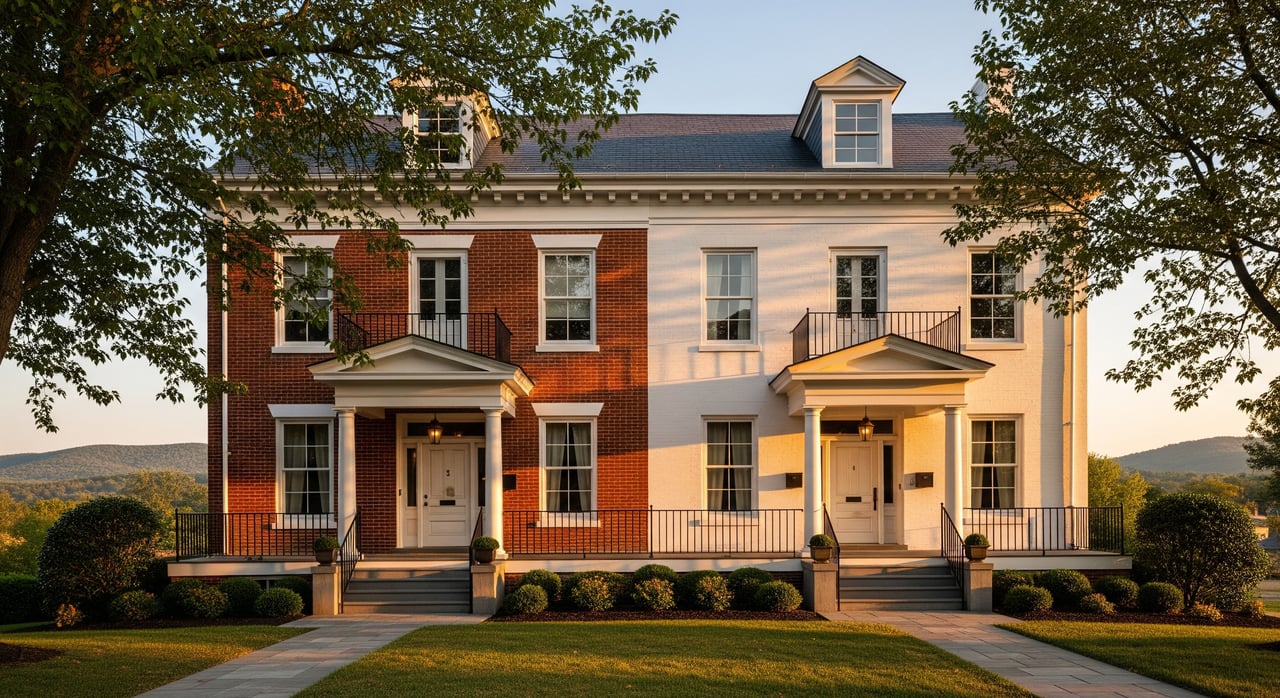
Thinking about house hacking or buying a small multifamily in Charles Town or Ranson? You’re not alone. Proximity to the D.C. metro and steady regional demand make Jefferson County a practical place to start. In this guide, you’ll learn how to evaluate a duplex, choose financing, understand local rules, and move from first search to closing with confidence. Let’s dive in.
Why Charles Town and Ranson appeal
You sit within the Washington–Arlington–Alexandria combined statistical area, so regional job hubs and hybrid work support renter demand. For a data snapshot on commuting and in‑migration trends, start with the American Community Survey from the U.S. Census Bureau and filter for Jefferson County and adjacent metros. You can access the ACS program overview and tools on the Census site to build custom tables.
Inventory and pricing shift with interest rates, so pull the last 6 to 12 months of local comps before you offer. For a quick pulse, look up the Zillow Home Value Index for Charles Town and the Zillow Rent Index for Ranson. Also scan local MLS data and rental listings to validate typical 1 to 2 bedroom rents.
Two buyer profiles tend to do well here. House hackers live in one unit and rent the other to reduce their monthly payment. Small investors focus on buy‑and‑hold or light value‑add, often targeting properties with room to improve rent, curb appeal, or utility setups.
How to evaluate a duplex
Start with income
- Gross Scheduled Rent (GSR): total annual rent at full occupancy.
- Effective Gross Income (EGI): GSR minus vacancy/credit loss, plus other income such as parking or pet fees.
- If you do not have local vacancy stats, a 5 to 8 percent assumption is a common starting point in stable markets. Confirm with recent rent-ups or a local manager.
Estimate realistic expenses
Plan annual line items for:
- Property taxes, using Jefferson County Assessor records for the exact parcel.
- Insurance for landlord coverage and liability.
- Utilities you pay as owner, depending on separate metering.
- Maintenance and repairs at 5 to 10 percent of EGI for older buildings.
- Capital reserves for big items like roofs or HVAC.
- Property management if you do not self-manage. Local managers often charge 8 to 12 percent of collected rent.
- HOA or city fees if applicable.
Know your key metrics
- Net Operating Income (NOI) = EGI minus operating expenses.
- Cap Rate = NOI divided by purchase price.
- Gross Rent Multiplier (GRM) = Purchase price divided by annual GSR.
- Cash‑on‑Cash Return = Cash flow after debt divided by cash invested.
- Debt Service Coverage Ratio (DSCR) = NOI divided by annual debt service.
Compare your numbers to recent local duplex sales and current rent comps. Lower GRM and higher cap rates suggest stronger income relative to price, but quality, condition, and location still matter.
Hypothetical underwriting example
- Purchase price: $300,000.
- Rents: $1,200 and $1,000 per month. GSR = $26,400.
- Vacancy at 6 percent. EGI ≈ $24,816.
- Expenses: taxes $3,000; insurance $1,200; owner utilities $1,800; maintenance at 8 percent of EGI ≈ $1,985; management at 10 percent of rent = $2,640. Total ≈ $10,625.
- NOI ≈ $14,191. Cap rate ≈ 4.73 percent.
- With 25 percent down and a 30‑year loan at 5 percent, annual debt service ≈ $15,493. Cash flow before taxes ≈ −$1,302, which signals you may need a lower price, higher rents, more down, or a different loan.
These are illustrative numbers to show the math. Always swap in actual local rents, current tax bills, real insurance quotes, and your lender’s terms.
Financing options for 2‑unit purchases
FHA for house hackers
FHA allows owner‑occupants to purchase 2 to 4 unit properties with as little as 3.5 percent down, and you must occupy a unit as your primary residence, typically within 60 days of closing. For program rules and definitions, review the FHA Single Family Housing Policy Handbook on HUD’s site.
VA loans for eligible buyers
If you are eligible for a VA‑backed mortgage, you can purchase up to a 4‑unit property as your primary residence, often with no down payment subject to entitlement and lender approval. See the VA Lenders Handbook and VA home loan pages for occupancy and property standards.
Conventional and portfolio loans
Many lenders offer conventional financing for 2‑unit primary residences with higher minimum down payments than single‑family, frequently around 15 percent for strong borrowers. Terms vary by lender and guidelines, so confirm the latest details in the Fannie Mae Selling Guide and with your loan officer. For pure investment purchases, expect 20 to 25 percent down or more.
Renovation financing
Buying a duplex that needs work? FHA 203(k) can wrap improvements into one loan, and Fannie Mae’s HomeStyle Renovation provides a conventional alternative. Both require approved scopes and oversight, so engage a lender early.
- FHA 203(k): HUD program page
- HomeStyle Renovation: Fannie Mae program page
Landlord, legal, and insurance basics in West Virginia
State landlord‑tenant framework
West Virginia statutes cover security deposits, notice periods, habitability, and eviction procedures. Read the Residential Rental Security Deposits section in West Virginia Code 37‑6A and the eviction and possession provisions in West Virginia Code 55‑3A. Because laws and timelines can change, consult a local attorney before you act on a notice or filing.
Local licensing and codes
Rules can differ by municipality. Ranson maintains a code of ordinances that may include rental registration, inspection, occupancy, and permitting requirements. Charles Town has its own municipal codes and permitting processes. Always confirm zoning and permits before converting or renovating units.
Insurance and safety
If you live in one unit, discuss the right mix of owner‑occupied and landlord policies with your insurer. Consider umbrella liability coverage and require renter’s insurance by lease. Verify smoke and carbon monoxide alarms, egress, heat, hot water, and electrical safety. For homes built before 1978, follow federal lead‑based paint disclosure rules.
Operations: tenants, leases, and maintenance
- Use consistent, written screening criteria that comply with the Fair Housing Act. Follow FCRA rules if you pull consumer reports.
- Put every agreement in writing. Your lease should spell out rent, deposits, utilities, entry, repairs, pets, and remedies for nonpayment.
- Line up vendors before you close. Keep a short list for HVAC, plumbing, electrical, roofing, and general repairs.
- Track income and expenses monthly. Reserve for capital items so a roof or HVAC replacement does not derail your plan.
Step‑by‑step: from search to close
Where to find deals
- Set MLS filters for “multi‑family” or “2‑unit” in Charles Town and Ranson.
- Network with property managers and local investor groups to hear about pocket or pre‑market opportunities.
- Use county records to identify absentee owners and mail introductions.
Your analysis workflow
- Quick screen with GRM and a market rent check.
- Build a conservative pro forma with vacancy, expenses, and NOI.
- Layer in likely loan terms to test DSCR and cash‑on‑cash.
- Set your maximum offer price to meet your target return.
- Write the offer with inspection, financing, and clear title contingencies.
Due diligence checklist
- Documents: leases, rent roll, deposit ledger, recent utility and insurance bills, maintenance receipts, tax bills, and any permits.
- Physical: general home inspection plus specialized checks for roof, HVAC, plumbing, electrical, pest, and lead‑based paint if applicable.
- Verify: legal duplex status, zoning, code violations, open permits, utility metering, and actual collected rent vs. market.
- After closing: transfer utilities, change locks, introduce yourself to tenants, and schedule priority repairs.
Work with a local advisor who knows both sides of the border
You want a calm, process‑driven path from first showing to final signature. As a boutique, family‑driven team serving Jefferson County and the Frederick metro, we pair cross‑border expertise with luxury‑grade service at every price point. Whether you are house hacking your first 2‑unit or adding to a portfolio, we can help you find, underwrite, and negotiate with confidence. Ready to explore duplex opportunities in Charles Town and Ranson? Connect with The Viands Group for local, investor‑minded guidance.
FAQs
What makes Charles Town and Ranson attractive for duplex investing?
- You benefit from proximity to the Washington–Arlington–Alexandria metro, commuter and hybrid‑work demand, and small‑city amenities that support steady rental interest.
How do I estimate vacancy and expenses if I am new here?
- Use a conservative 5 to 8 percent vacancy assumption to start, then refine with local manager input and recent rent‑up times; budget 5 to 10 percent of income for maintenance and add a separate capital reserve.
Can I buy a duplex with an FHA or VA loan?
- Yes, if you will live in one unit as your primary residence; FHA allows as little as 3.5 percent down and VA may allow zero down for eligible buyers, subject to lender approval and occupancy rules.
What down payment do I need for a conventional 2‑unit?
- Many lenders require higher minimums than single‑family, often around 15 percent down for a strong primary‑residence borrower and 20 to 25 percent for investment loans.
Do I need a rental license in Ranson or Charles Town?
- Requirements can vary by city; Ranson maintains a public code of ordinances and Charles Town has its own municipal codes, so verify current registration, inspection, and permitting rules before you list a unit.
What documents should I collect during due diligence?
- Request leases, rent rolls, deposit records, recent tax and utility bills, insurance declarations, maintenance receipts, permits, and proof the property is a legal duplex.